When parents hear the word discipline, they may immediately think of rules, consequences and correcting bad behavior. But discipline can be much more than punishment.
At its best, discipline is teaching.
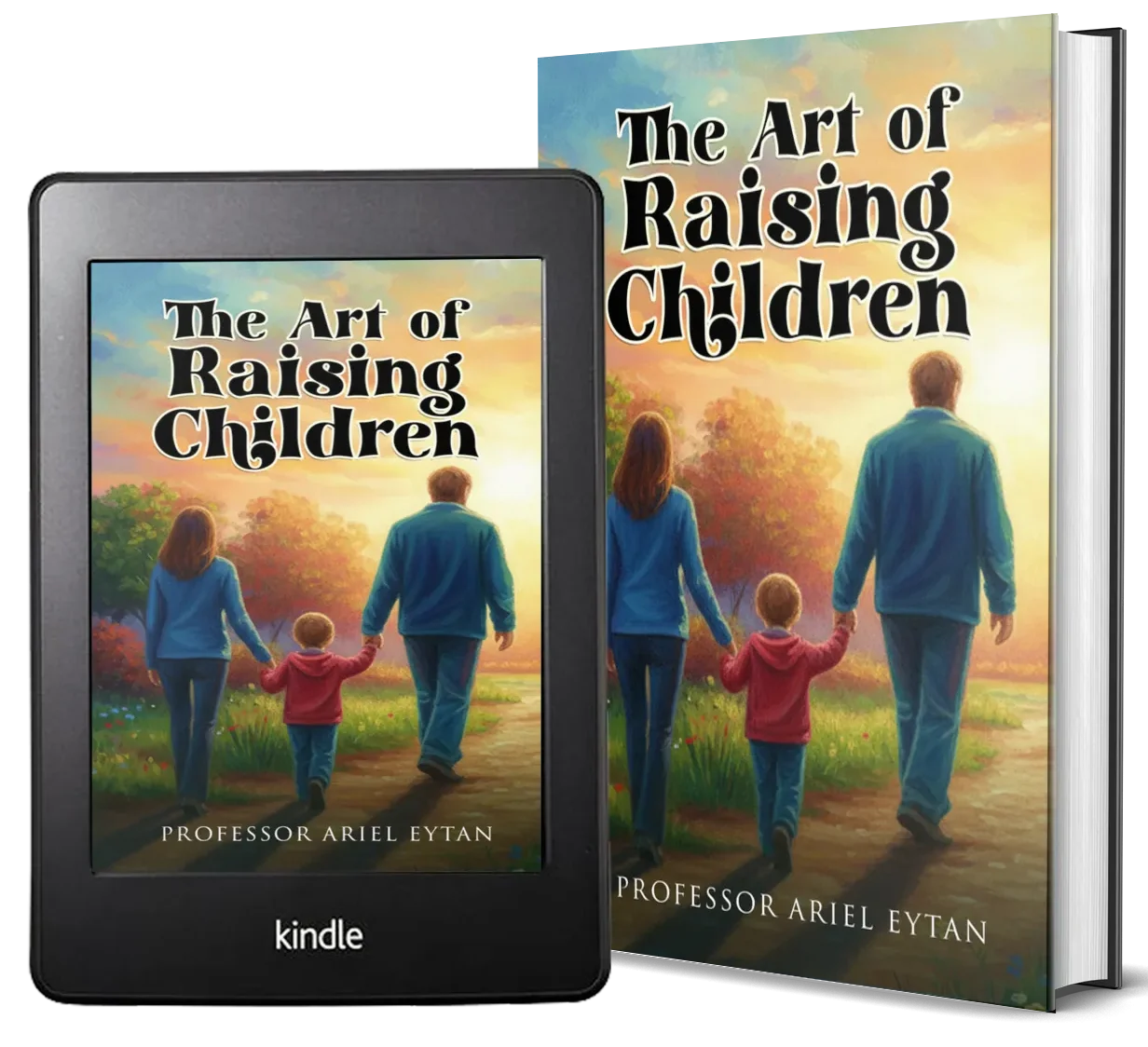
In The Art of Raising Children, Professor Ariel Eytan presents an approach to parenting that combines clear expectations with empathy, consistency and respect. The goal is not simply to make children obey in the moment. It is to help them gradually develop responsibility, judgment, emotional control and the ability to make better choices on their own.
That shift changes the entire purpose of discipline.
Fear Can Produce Obedience But Not Always Understanding
A child may follow a rule because they are afraid of being yelled at, embarrassed or punished. That can produce immediate compliance, but it does not necessarily teach the child why the rule matters.
Professor Eytan emphasizes the value of discipline that guides rather than humiliates.
Instead of relying on fear, parents can explain expectations clearly, discuss consequences and help children understand the connection between actions and outcomes. When possible, natural or logical consequences can become powerful teaching tools.
If a child neglects a responsibility, for example, the consequence should ideally help them understand responsibility rather than simply make them suffer for making a mistake.
The question becomes less about, “How do I make my child pay for this?” and more about, “What can my child learn from this?”
Consistency Gives Children Security
Compassion does not mean having no rules.
Children need boundaries. In fact, predictable limits can help them feel secure because they know what is expected and what will happen when those expectations are ignored.
The challenge is consistency.
When a behavior is forbidden one day, tolerated the next and punished harshly the day after that, children receive confusing signals. Consistent expectations make it easier for them to understand limits and eventually internalize them.
At the same time, Professor Eytan’s approach recognizes that every situation and every child is different. Good parenting combines structure with flexibility rather than applying rules mechanically.
Stay Calm Enough to Teach
Some of the hardest moments of parenting happen when children are angry, defiant, frustrated or overwhelmed.
Those moments test parents, too.
But yelling, shaming or reacting impulsively can turn discipline into a battle of emotions. A calmer response creates space for something more valuable: learning.
Parents can acknowledge a child’s feelings without accepting inappropriate behavior.
“You are angry” and “You may not hit” can both be true.
This combination of empathy and boundaries helps children learn that emotions are acceptable, while harmful behavior still has consequences.
Over time, children begin developing the emotional regulation needed to manage themselves without constant external control.
The Real Goal Is Self-Discipline
Perhaps the most important distinction in The Art of Raising Children is between controlling children and teaching them to control themselves.
Parents will not always be standing beside their children. Eventually, children must make decisions without supervision.
That is why lasting discipline should develop internal responsibility rather than dependence on punishment.
When children understand expectations, experience reasonable consequences, feel respected and have opportunities to reflect on their choices, they begin building an internal compass.
That is the deeper purpose of compassionate discipline.
Professor Ariel Eytan’s The Art of Raising Children reminds parents that firmness and kindness are not opposites. Children can be held accountable without being frightened, guided without being humiliated and corrected without losing their sense of security.
The objective is not a child who behaves well only when an adult is watching.
It is a child who gradually learns to choose responsibility because they understand why it matters.