Every parent wants to protect their child from disappointment.
We want them to succeed in school, make good choices, avoid painful mistakes and move confidently toward a bright future. But in trying to protect children from failure, parents can sometimes remove one of life’s most valuable teachers.
Failure.
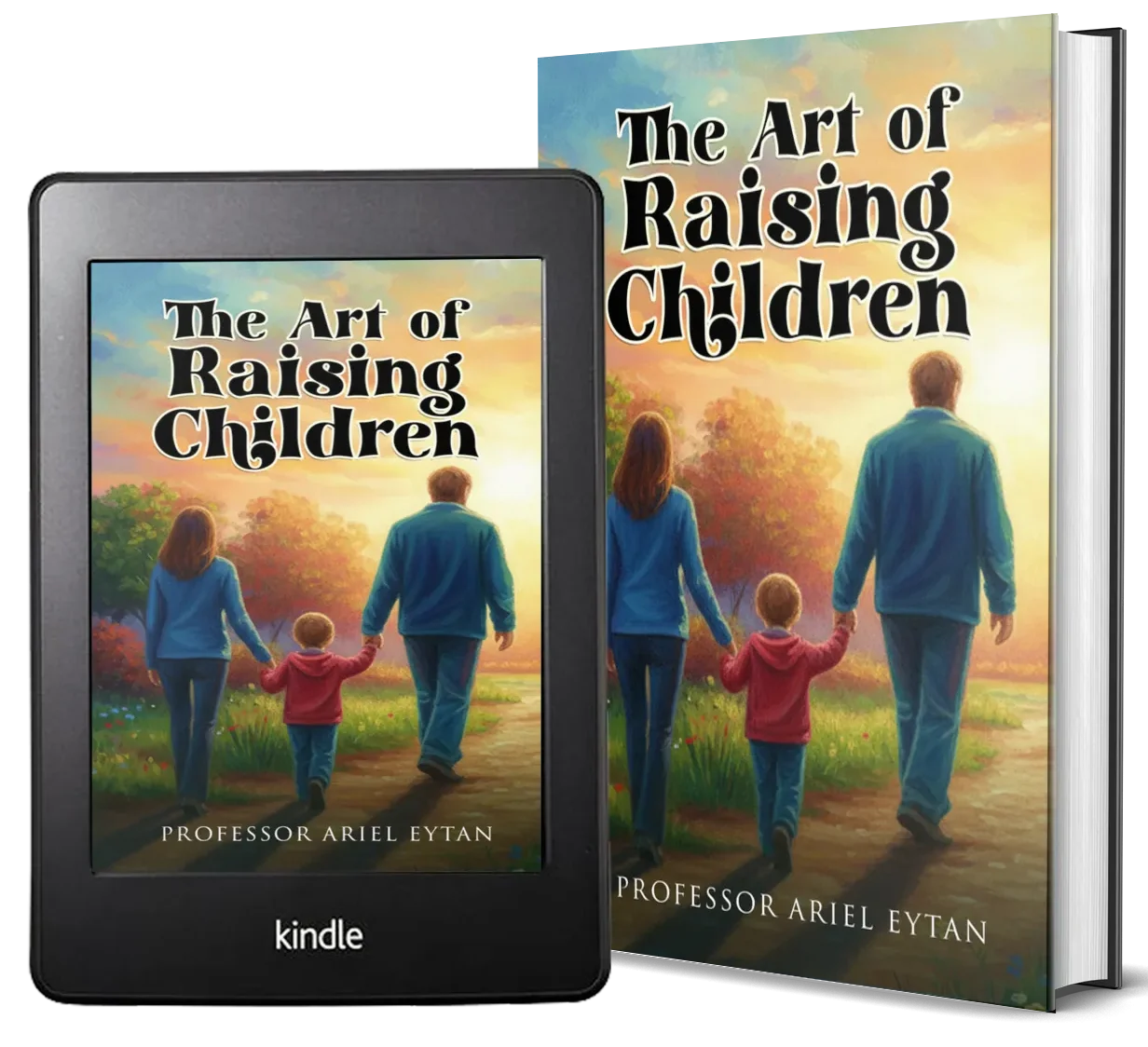
In The Art of Raising Children, Professor Ariel Eytan explores the importance of helping children develop resilience, perseverance and a growth mindset. Rather than treating mistakes as something shameful, the book encourages parents to see setbacks as opportunities for learning, reflection and personal development.
The goal is not to make life harder for children. It is to prepare them for a life in which difficulties are inevitable.
Failure Does Not Have to Mean Defeat
Children can easily learn to associate mistakes with embarrassment.
A poor grade may feel like proof that they are “not smart.” Losing a competition may make them believe they are “not talented.” Struggling with a new skill may convince them that they should simply give up.
Parents can help change that interpretation.
Professor Eytan emphasizes the value of a growth mindset: the understanding that abilities can develop through effort, practice, persistence and learning from experience.
Instead of seeing failure as a final judgment, children can begin seeing it as information.
What went wrong?
What could I try differently?
What did this experience teach me?
What should I do next?
These questions turn mistakes into movement.
Resist the Urge to Fix Everything
One of the hardest parts of parenting is watching a child struggle.
The instinct to step in can be powerful. We may want to solve the difficult homework problem, speak to the teacher immediately, repair a friendship conflict or remove an obstacle before our child has the chance to face it.
Sometimes children genuinely need adult help. But they also need opportunities to solve problems themselves.
When parents immediately rescue children from every uncomfortable situation, children may lose valuable chances to build confidence and resourcefulness.
Support does not always mean providing the answer.
Sometimes it means staying close enough to encourage them while allowing them to discover that they are capable of finding their own way forward.
Praise the Process, Not Only the Result
Children quickly notice what adults celebrate.
If praise comes only after top grades, trophies, victories and perfect results, children may conclude that achievement is the only thing that matters.
A healthier approach is to also recognize effort, persistence, improvement, curiosity and courage.
A child who struggled, adjusted their approach and tried again has accomplished something important even if the final result is imperfect.
This perspective helps children understand that success is not simply about winning. It is also about becoming stronger, wiser and more capable through the process.
Resilience Is Built Through Experience
The world children eventually enter will not always reward them immediately.
They may face rejection, changing circumstances, difficult relationships, career setbacks, uncertainty and unexpected challenges.
Parents cannot prepare children for every problem. They can, however, help them develop the resilience to respond when problems appear.
That is one of the central messages of The Art of Raising Children. Professor Ariel Eytan encourages parents to raise children who can persevere, adapt, reflect and continue growing through difficulty.
A mistake does not have to become a label.
A setback does not have to become a stopping point.
And failure does not have to be the opposite of success.
With the right guidance, failure can become part of the journey toward it.
Perhaps one of the greatest lessons parents can teach their children is not simply how to succeed but how to fail, learn, stand up and try again.