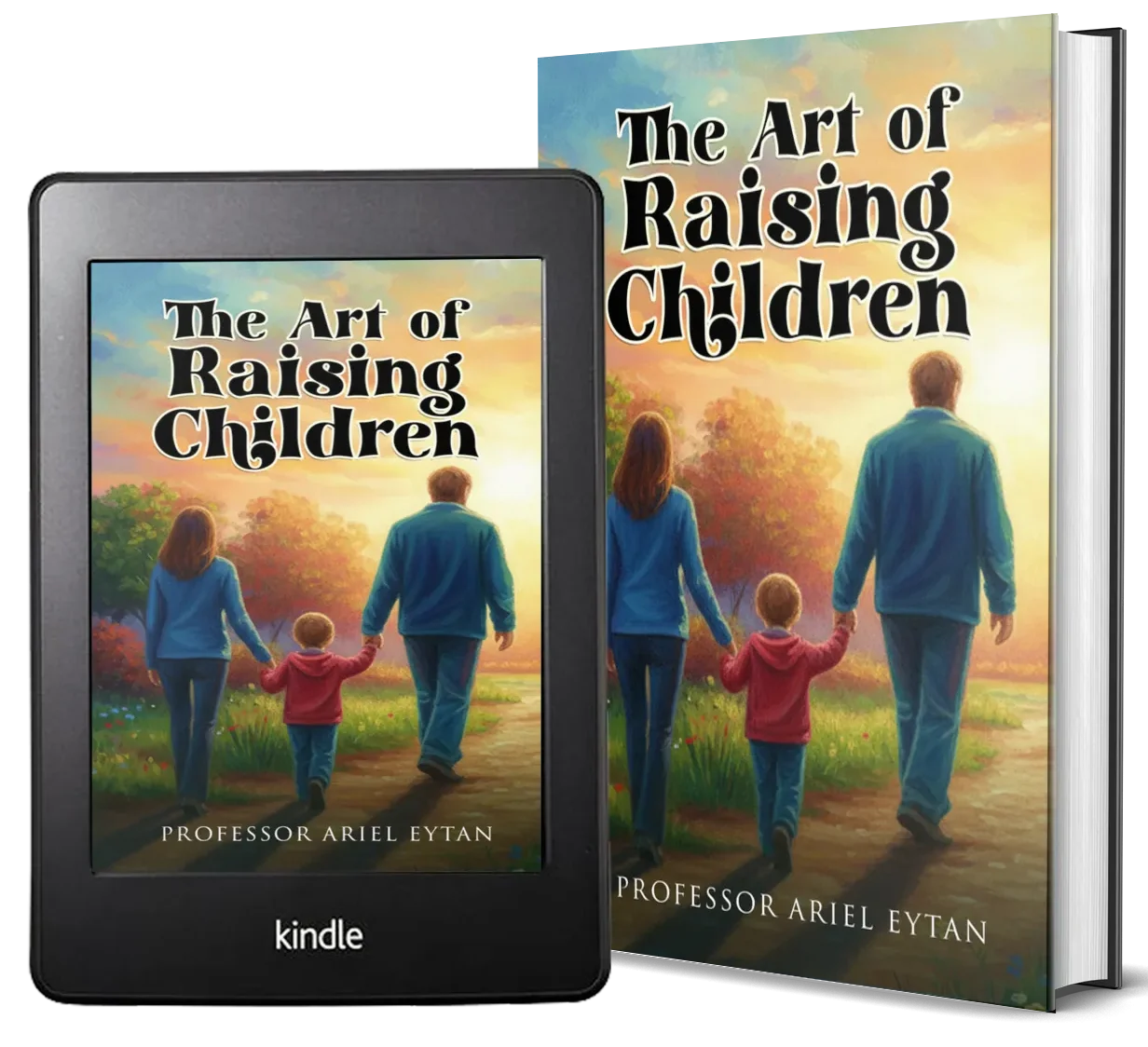
Strong communication and thoughtful decision making are not skills that suddenly appear in adulthood. They are shaped gradually, beginning in childhood, through daily interactions, guidance, and example. Parents who recognize this early gain a powerful opportunity to prepare their children for a life of confidence, clarity, and responsibility. The Art of Raising Children by Professor Ariel Eytan presents a clear and grounded approach to developing these essential abilities from the very start.
Communication begins with something simple yet often overlooked: listening. Children who feel heard are more likely to express themselves openly and honestly. When parents create an environment where questions are welcomed and opinions are respected, children begin to understand that their voice matters. This foundation builds confidence and encourages them to engage more actively in conversations both at home and beyond.
Decision making follows closely behind communication. A child who can express their thoughts is better equipped to make choices. Yet many children are not given enough chances to decide for themselves. Parents often step in with ready answers, believing they are helping. In reality, children need guided experiences where they can weigh options, consider outcomes, and learn from the results of their decisions.
Professor Eytan emphasizes the importance of allowing children to take part in age appropriate decision making. This can be as simple as choosing how to approach a task, deciding how to manage time, or resolving a minor conflict. These moments teach responsibility and help children understand that their choices have consequences. Over time, this builds confidence and independence.
One of the most effective ways to strengthen decision making is through discussion. When a child faces a choice, asking thoughtful questions can guide them toward clarity. Instead of giving direct answers, parents can ask what the child thinks will happen, what options they see, and which path feels right. This approach encourages reflection and strengthens the ability to think critically.
Mistakes also play a valuable role in this process. Children will not always make the best choices, and that is part of learning. When mistakes are treated as opportunities rather than failures, children develop resilience and a willingness to try again. They begin to understand that good decisions are often the result of experience and reflection.
Another key element is consistency. Children learn best when communication and decision making are practiced regularly. Families that engage in open conversations and involve children in everyday choices create a natural learning environment. Over time, these repeated experiences shape habits that stay with children as they grow.
Parents themselves serve as the most influential examples. Children observe how adults communicate, handle disagreements, and make decisions under pressure. When parents demonstrate calm thinking, respectful dialogue, and thoughtful choices, children absorb these behaviors and begin to apply them in their own lives.
What makes The Art of Raising Children especially valuable is its ability to connect these practical steps with a broader vision of growth. It does not treat communication and decision making as isolated skills, but as essential parts of a child’s overall development. By combining cultural insight with real world application, Professor Eytan offers guidance that feels both meaningful and achievable.
Teaching communication and decision making early is not about control. It is about preparation. It is about giving children the tools to think clearly, speak confidently, and act responsibly. These skills shape how they navigate relationships, challenges, and opportunities throughout life.
For parents seeking a thoughtful and effective approach to raising capable and confident children, The Art of Raising Children by Professor Ariel Eytan provides a powerful and practical guide.