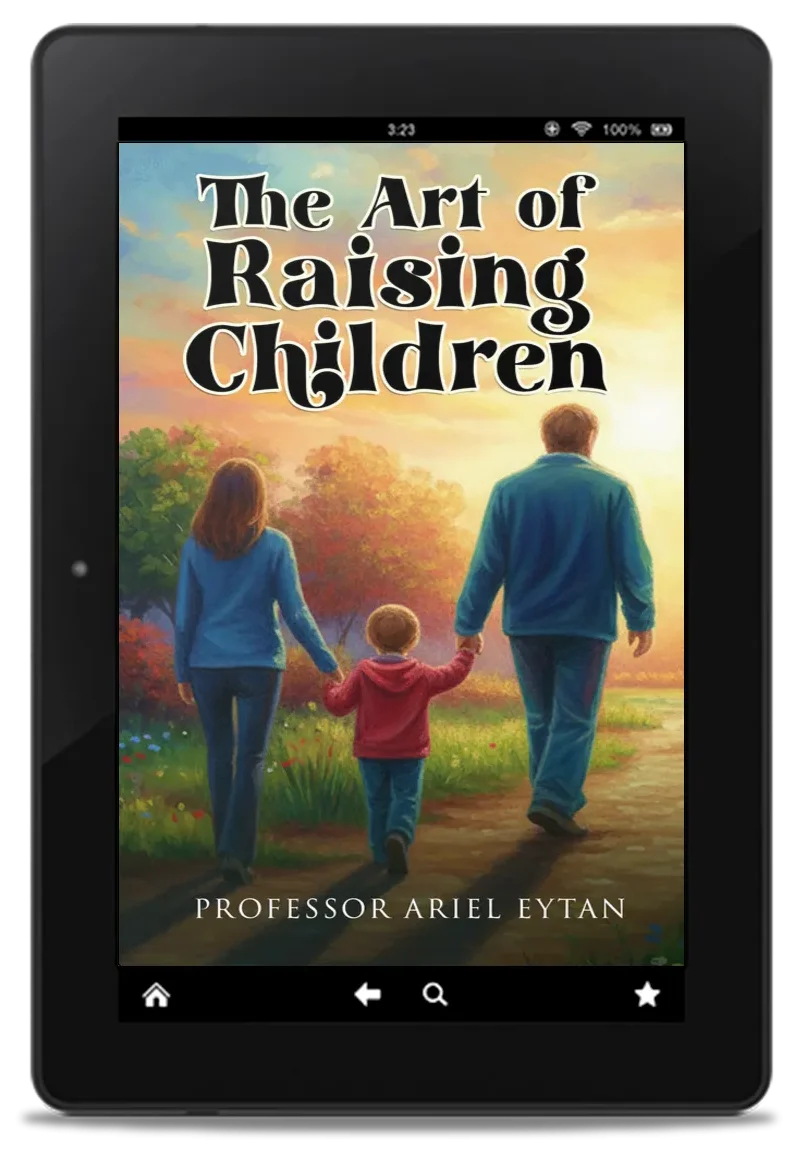
Parenting is not an easy thing. And especially for those who are experiencing this beautiful period for the very first time, parenting can become a nightmare, if not a very pleasant thing. The Art of Raising Children by Professor Ariel Eytan stands apart in the parenting genre. By offering a calm, reflective, and culturally informed guide to raising children in an increasingly complex world, and rather than prescribing fixed solutions, the book encourages parents to think critically about values, priorities, and the long term impact of their choices.
From the opening chapters, Professor Eytan establishes a central idea that runs throughout the book: success is not a single destination, nor is it defined solely by grades, income, or status. Instead, success emerges from a combination of intellectual curiosity, emotional strength, ethical responsibility, and meaningful relationships. This broader definition provides a refreshing counterbalance to high pressure educational environments where children are often evaluated through narrow metrics.
The book draws heavily on Jewish cultural values, particularly the emphasis on education, debate, perseverance, and community. What makes this approach effective is the author’s sensitivity. Jewish culture is not presented as a superior model, but as a source of insight shaped by history, resilience, and adaptation. Professor Eytan repeatedly emphasizes that these values are not exclusive and that they resonate strongly with East Asian traditions.
This cross cultural dialogue is one of the book’s greatest strengths. By identifying shared principles such as respect for elders, lifelong learning, and collective responsibility, The Art of Raising Children encourages parents to view cultural exchange as enrichment rather than imitation. The book makes it clear that meaningful learning from another culture requires understanding, humility, and respect.
Another notable feature is the book’s treatment of discipline and boundaries. Discipline is framed not as punishment, but as guidance rooted in consistency and compassion. Children are encouraged to understand the consequences of their actions while feeling supported rather than shamed. This balanced approach reflects a deep understanding of child psychology without relying on technical terminology.
Professor Eytan also devotes significant attention to emotional intelligence, creativity, and resilience. These chapters feel particularly relevant in a world where children face constant comparison and external pressure. By emphasizing emotional regulation, open communication, and the ability to recover from setbacks, the book prepares parents to support children not only academically but emotionally.
The writing style is clear, steady, and accessible. The tone is thoughtful rather than authoritative, which makes the book feel like a conversation rather than a lecture. Real life examples and cultural references are used carefully to illustrate ideas without overwhelming the reader.
Importantly, The Art of Raising Children recognizes that parenting is not static. Families change, children grow, and societies evolve. The book encourages parents to adapt traditions thoughtfully while preserving their core values. This flexibility allows the guidance to remain relevant across different family structures and cultural contexts.
In conclusion, The Art of Raising Children by Professor Ariel Eytan offers a meaningful alternative to formula driven parenting advice. It is a book grounded in cultural wisdom, ethical reflection, and practical compassion.
For parents seeking to raise children who are not only successful but also grounded, resilient, and socially responsible, this book provides a thoughtful and enduring guide.